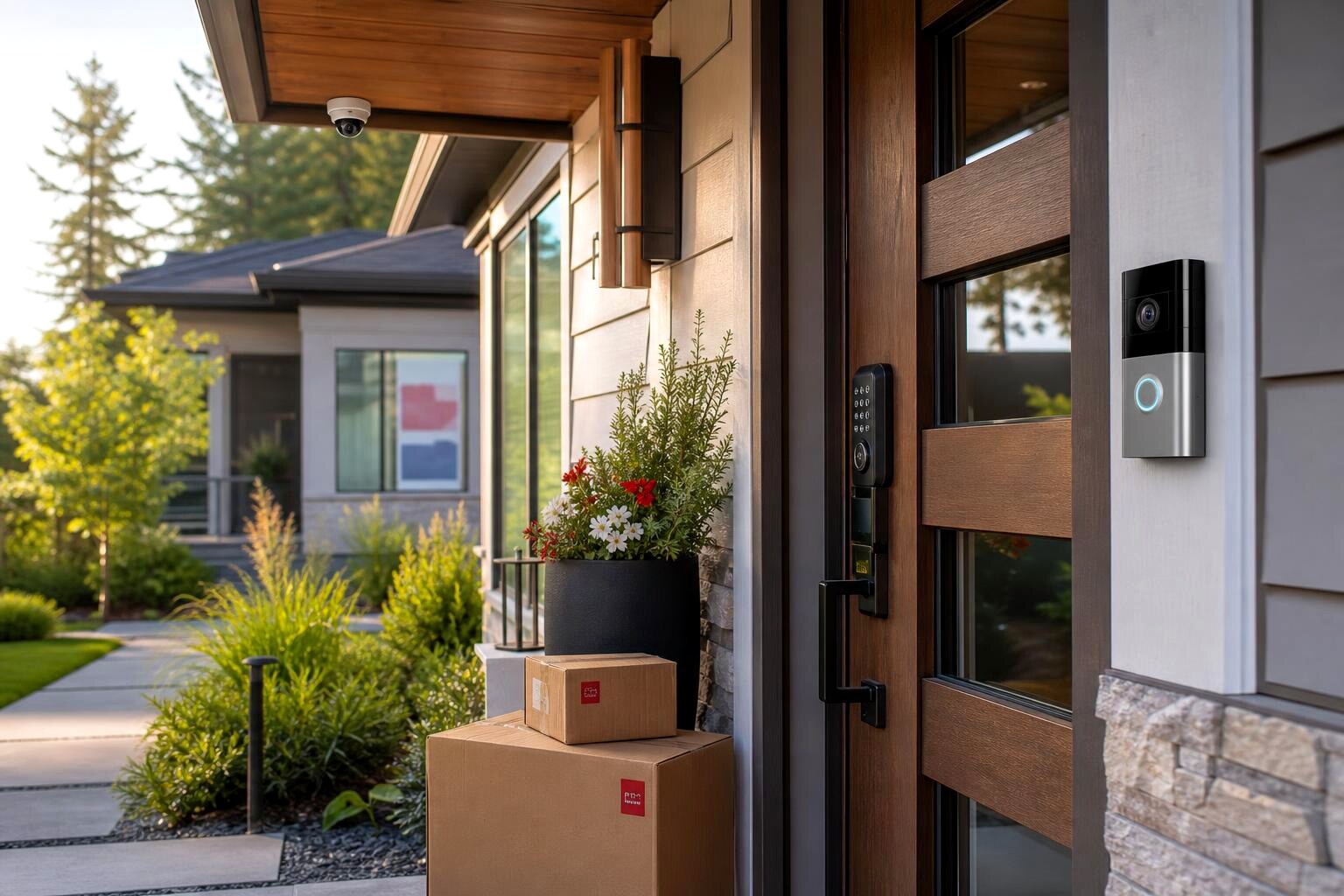
Prime Day 2026 runs June 23 through 26, which means at the time of this article going up you have roughly forty-eight hours left to make a decision. Most of the security camera and smart lock prices flying past your screen will be real, but plenty of them are bad buys at any discount. This is a buyer's framework, not a price list. The goal is to walk away with hardware that still makes sense in October when the deal is long over and the subscription email arrives.
The Short Version
Prime Day favors hardware buyers, not subscribers. Lean toward cameras and locks that work well without a paid cloud plan, prioritize categories you were already planning to buy, and ignore the percentage off in favor of the long-term cost of owning the device. If a deal only looks good because of a one-month subscription teaser, it is not a deal.
Start With the Question You Actually Need to Answer
Before you open a single Prime Day page, write down the problem you are solving. Are you covering a front door, a back yard, a side gate, a garage entry, or a whole-home system? Most regret on Prime Day comes from buyers who shop categories instead of problems. A 60-percent-off indoor camera is still wrong if what you needed was a weatherproof outdoor unit. A bundle deal on an alarm kit is still wrong if you live in an apartment that does not allow drilled door and window sensors.
If you are still mapping out what you actually need, our how to choose a security system guide walks through the decision in plain language. Buyers replacing or expanding an existing setup should keep our best smart home security systems roundup open as a sanity check on whether the brand you are about to buy into still fits your house in 2026.
The Deal Math That Matters: Hardware Versus Subscription
The single biggest Prime Day trap in home security is treating a camera or alarm price in isolation. The honest question is what you will spend across the next twenty-four months, including the subscription you may not realize is now required for features you assumed were included. Cloud video storage, smart alerts, person detection, package detection, and even some local recording features have all moved behind paid plans at one brand or another over the last few years.
Two practical rules help. First, write down the monthly plan cost next to the deal price. Multiply by twenty-four. That is the real number you are comparing across brands. Second, decide whether you are okay with that plan price going up. Subscription pricing in home security has trended upward, not downward, and locking into a brand because of a one-time hardware discount is a long bet on the company holding the line.
If you would rather avoid the entire monthly fee conversation, our best home security with no monthly fee guide and our best cameras with no subscription picks both lean toward hardware that earns its keep on day one without a cloud plan attached. Those are the categories where Prime Day discounts compound in your favor instead of the manufacturer's.
Cameras: What to Actually Hunt For
The camera aisle is the noisiest part of Prime Day. The brands worth your attention are the ones whose hardware still feels reasonable if you never pay another dollar. That usually means local storage support, useful free-tier event recording, and an app that does not bury basic alerts behind a paywall. The two main paths are battery-powered wire-free cameras and wired plug-in or PoE-style units. Battery cameras win on installation simplicity. Wired and PoE cameras win on long-term reliability and continuous recording.
For outdoor coverage, treat field of view, low-light performance, and weather rating as non-negotiable. A camera that washes out at night or hates a real rainstorm is not a deal at any price. Buyers who want a deeper breakdown of which models hold up year-round should read our best outdoor security cameras guide alongside whatever deal listing you are looking at. For interior coverage like nurseries, hallways, or pet rooms, the bar is different and our best indoor security cameras picks are a faster shortcut than scrolling through hundreds of listings.
One more pragmatic tip: be careful with starter kits that are heavily discounted on the kit, but where the matching add-on cameras are priced at full retail. Owning two cameras of a brand that costs four times more to expand is a worse outcome than owning the same number of cameras of a brand that scales cleanly.
Doorbells: A Different Tradeoff
Video doorbells are the one category where a slightly more expensive pick is often the right Prime Day move. Doorbells live outdoors, deal with constant motion, and replace a piece of hardware most homes still rely on every day. Buying a cheap doorbell to save twenty dollars and then dealing with missed packages, sluggish notifications, or a low-resolution head-to-toe view is one of the most common regrets we see.
Decide first whether you want a wired or battery doorbell. Wired models are more reliable and avoid charging duty, but require existing doorbell wiring or a quality transformer. Battery models give you placement flexibility at the cost of a battery you will be removing every few months. From there, prioritize a head-to-toe vertical view, package detection that does not require a separate subscription, and a clear two-way audio experience. Our best video doorbells roundup is the cleanest starting point if you want a shortlist instead of a wall of model numbers, and our Ring versus Nest doorbell comparison is the better read if you have already narrowed it down to those two ecosystems.
Smart Locks: Buy the Lock, Not the Sticker
Smart locks are the part of Prime Day where the worst regrets get permanently bolted to your front door. A bad camera can be moved. A bad smart lock is a weekend project to undo. The right priorities are the lock body, the bolt mechanism, the keypad or fingerprint surface durability, and the company's track record on app reliability and firmware support. Apple Home Key, Matter over Thread support, and clean Google Home or Alexa integration are real reasons to spend more for the right model.
Be skeptical of unfamiliar lock brands that suddenly appear with aggressive Prime Day banners. A two-year-old lock with a long history of firmware updates is almost always a better buy than a brand-new lock from a label nobody can name in 2024. Our best smart locks guide walks through which form factors fit which households, and our eufy FamiLock S3 Max review covers one of the more interesting combo lock-and-doorbell options in the same purchase.
Bundles and Whole-Home Systems
Whole-home alarm bundles, base stations, and multi-sensor kits show some of the steeper discounts during Prime Day, which makes sense because the manufacturer is signing you up for an ecosystem, not just a sale. That is fine, if you are honest about the ecosystem you want to live inside. Ring, SimpliSafe, Arlo, and a handful of smaller brands all play this game during the event.
Two filters help cut through the noise. First, does the system work in self-monitored mode if you cancel professional monitoring later? If the answer is no, you are not buying hardware, you are buying a contract. Second, do the sensors and extra cameras you will inevitably add cost reasonable money on a normal day? If a four-piece starter kit is half price but the next four sensors will cost more than the kit itself, the system is expensive, not cheap.
If you are juggling several of these options, our best security bundles under $500 guide is a useful sanity check on which kits are genuinely good buys at street price. Apartment renters should pair this with our best security for apartments guide so you do not accidentally buy a kit that fights your lease.
What to Skip Even at a Discount
A short list of things that are usually still bad ideas at a Prime Day price. First, off-brand 4K outdoor cameras with no clear support history. The video looks great on the box and never quite does in your driveway. Second, locks that depend entirely on Bluetooth with no Wi-Fi or Thread bridge. They feel modern until you are not home. Third, indoor cameras with audio features that route through unfamiliar cloud services. The privacy math gets ugly fast. Fourth, smoke or carbon monoxide detectors that are not sealed-battery or hardwired models from established safety brands. Lifesaving devices are not where you save twelve dollars. Our best smart smoke and CO detectors picks are the safer place to start.
How to Actually Run the Final 48 Hours
Three habits to use before checkout. Open the product listing in a fresh tab and read the most recent reviews first, not the top-helpful reviews from years ago. Quickly check whether the version number you are about to buy is the current generation, not last year's lookalike. And use a price-tracker browser extension or a quick search of the model number to confirm the deal price is genuinely below the typical street price, not just below the inflated list price the seller raised last week. If the deal still looks strong after those three checks, it probably is.
Bottom Line
Prime Day 2026 is a good window for home security buyers who already know what they need and a frustrating window for those who do not. Lean on guides you trust, focus on hardware that still earns its keep without a subscription, and stop comparing percentages off. Compare the total cost of owning the device for the next two years. The buyers who do that walk away with a quieter, calmer home setup in July. The buyers who chase the biggest banner walk away with a drawer of returns.
FAQ
Is Prime Day actually a good time to buy home security gear?
It can be, especially for outdoor cameras, smart locks, and bundle kits from established brands. It is a poor time to buy gear you were not already planning to own or gear that only looks affordable when paired with a promotional subscription.
Should I trust the discount percentage on a security camera listing?
Not on its own. Sellers sometimes raise the list price ahead of the event so the percentage off looks larger. Compare the deal price to the typical street price over the last few months, not to the list price shown on the page.
Are subscription-based cameras ever worth it during Prime Day?
Sometimes, if you genuinely use the paid features and the brand has a steady pricing history. Always include twenty-four months of subscription cost in your comparison so the real cost of ownership is on the table.
What is the safest category to buy on Prime Day for most homes?
Outdoor cameras and smart locks from brands with a clear support history. Both categories have meaningful day-one value, do not require a subscription to be useful, and have a wide enough field of solid options that real discounts show up every year.